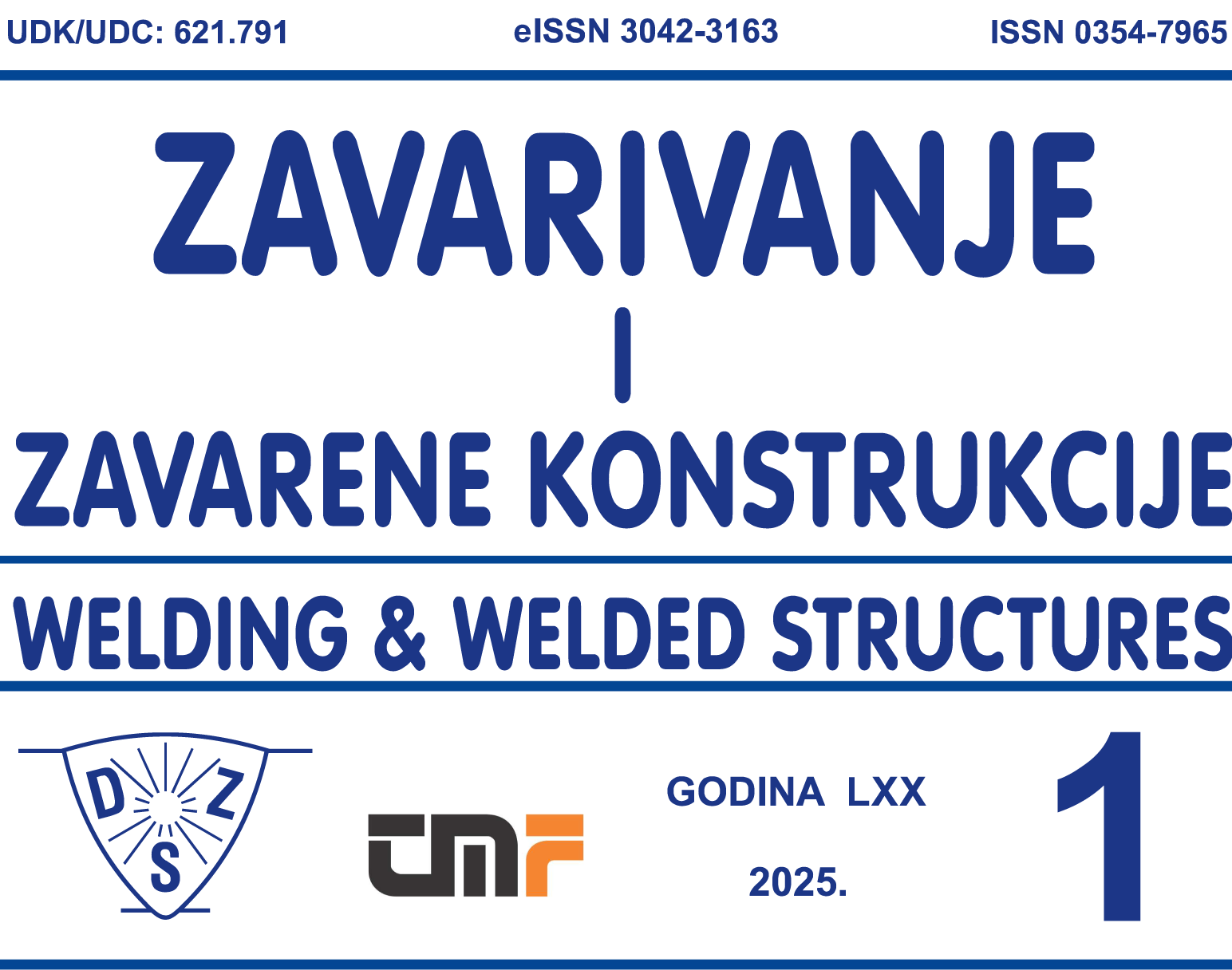


Publishes original papers on the welding and joining processes of materials, and provides English translations of articles from major international welding journals.
Welding and Welded Structures is a peer-reviewed journal which aims to enrich the global exchange of scientific activities in the welding and joining processes of materials. The journal reports the achievements of science and engineering of welding and joining, with original research papers, review articles invited by the editors, letters, and brief research notes, encompassing: all joining techniques, cutting, thermal spraying, and related aspects, as metallurgical and material investigations relating to welding, characterization and service performance of joints, control and automation of welding, analytical and numerical modeling of joining processes, and additive manufacturing.

Open access refers to the practice of providing unrestricted, free access to research articles. Instead of being locked behind paywalls or requiring expensive subscriptions, open-access journals like Welding and Welded Structures make their content available to anyone with an internet connection. This democratization of knowledge helps ensure that researchers, students, and healthcare professionals from around the world can access the latest scientific findings without financial barriers.
For researchers, publishing in an open-access journal like Welding and Welded Structures offers numerous advantages:
Welding and Welded Structures is committed to promoting open access as a way to share biomedical knowledge and foster collaboration across borders. By removing financial barriers, Welding and Welded Structures ensures that the latest advancements in biomedical science can benefit the global community, from researchers to healthcare providers and policy makers.

In the welding industry, safety is of the highest importance, and welders with strong work ethics are more likely to follow safety rules. They take efforts to lessen the risks associated with welding training, such as donning the proper safety gear, maintaining tools and equipment in excellent condition, and inspecting their work for defects. They are aware of the risks associated with welding training.
We follow the highest ethical standards as outlined by leading organizations like the Committee on Publication Ethics (COPE). Authors must provide detailed information about their study’s ethical considerations, such as institutional review board (IRB) approval, and any financial support that may influence the research. Additionally, reviewers are expected to provide unbiased and constructive feedback without compromising the confidentiality of the submitted manuscript.
Transparency is a cornerstone of scientific integrity. We emphasize the importance of clear and honest reporting of research findings, including methods, results, and any limitations. Transparency ensures that other researchers can replicate studies, which is critical for validating and building upon previous work. Our commitment to research transparency helps maintain the trust of the scientific community and the public.